Welcome to EYFS – Iona

Saint Columba, an Irish monk, came to Iona in 563 AD and started a monastery there. From Iona, Christianity spread across Scotland and beyond. Today, many Christians visit Iona to learn about its history, pray, and feel closer to God in its peaceful and beautiful surroundings.

About EYFS

  • In Iona, we follow the EYFS document which combines the early years and the foundation stage, creating a national curriculum for the under 5’s.
  • Through specially chosen topics we plan for the 7 areas of learning. The 3 prime areas of Physical Development, Personal, Social and Emotional Development and Communication and Language are our foundations upon which we build further learning through the 4 specific areas. The 4 specific areas are: Literacy, Mathematics, Understanding the World and Expressive Arts and Design.
  • All 7 areas of learning are reflected both indoors and outdoors, so no matter where the children are exploring they will be learning.

Thank you for all your support. 

Our class teacher is Mrs Wilby and our wonderful teaching assistant is Mrs Eaton.

Meet the Teacher

Please find below the EYFS Meet the Teacher presentation for the 2024-25 year. It outlines who is who in EYFS, an overview of our curriculum, communication and reporting and uniform expectations.

St Elizabeth’s Meet The Teacher Presentation Iona September 2025


Coming soon…

As a school and class we are now excited to use ClassDojo as a way to connect school and home, building a positive classroom community. ClassDojo is a free app that allows teachers and parents to communicate and celebrate learning. Teachers verify all requests to join ClassDojo before approving, so please be assured that only verified parents and carers can access these Dojo pages.

We have a whole-school Class Dojo account which is used to:

  • Share School-Wide Updates & Announcements – You’ll receive reminders of key events and dates, such as SEA events, masses and performances.

We also have Class Dojo accounts for individual classes which are used to:

  • Share Class-Specific Updates & Announcements – You’ll receive reminders of dates and events specfic to your child’s class, photos of their school journey and important achievements.

  • Encourage Positive Behavior – Students can earn Dojo points for showing respect, responsibility, teamwork, effort and a whole host of other positive qualities and attitudes. As parents/carers conneced to your child’s account, you can see what Dojos they have earnt across the week. Dojos across the school are then counted up by our Year 6 House Captains every Friday and the winning house (St. Bernadette’s, St. Anthony’s, St. Teresa’s or St. Dominic’s) is announced in our Friday afternoon Acheivement Celebraton of the Word.

  • Showcase Learning – Teachers can post work and images to the children’s individual portfolios so that you can see what they’re proud of. Photos of your child will be only be put onto the Class Story if prior consent from a parent or guardian has been given for this.

  • Stay Connected – Parents can message teachers directly through the app for quick communication. However, during the school day, looking after and teaching your wonderful children remains our staff’s priority. Therefore, we ask you to understand that the Class Dojo messaging feature will not be continually monitored. A response will only be given Monday–Friday and during school hours. Teachers may not respond instantly and, as such, anything urgent should be communicated to the school via usual means. We kindly ask you to respect staff’s time and keep any messages to a minimum, for us to continue to allow this feature to be used.

    Class Dojo should not be used for any of the following type of communication at any time:

    • Absence or illness
    • Safeguarding
    • Complaints of any type
    • Discussing a child’s progress or attainment

We strongly encourage all families to join ClassDojo so that you can stay engaged and up-to-date with your child’s school journey. Together, we can celebrate successes and support growth every day! If you are not connected to ClassDojo, please contact your child’s class teacher for the access code.

As a school, we have been thinking about our Franciscan heritage and have decided to introduce seven values – based on the Franciscan values – to underpin all that we do at St Elizabeth’s. The seven values are: Joy, Forgiveness, Faith, Respect, Service, Peace and Stewardship. We will all strive to live out these values on a daily basis but each class will pay close attention to their own value.

In EYFS, our value is joy. The children are taught about true joy coming from a relationship with God through Jesus. In obeying Jesus and His teachings we can have a fulfilled and joyful life.

John 15:11 states “These things I have spoken to you, that My joy may remain in you, and that your joy may be full.”

Starting in September 2024, EYFS (along with Year 2 and Year 6) will be following the new RED (Religious Education Directory), To Know You More Clearly, launched by the Catholic Education Service. This framework will be progressively rolled out across the school, replacing the Come And See scheme by the 2025 academic year.

“While nurturing the faith of Catholic pupils, the curriculum prepares all pupils to play their part as critical citizens in a plural and diverse culture. Topics covered include the relationship between faith and science; the problem of evil; nature of human freedom; rights of the unborn; plight of refugees and asylum seekers; war and peace.” (Catholic Education Service).

Advent Term 

Branch 1 – Creation & Covenant.
God made our beautiful world and everything in it.
God made me.

Branch 2 – Prophecy & Promise.
Mary was going to have a baby.
His name will be Jesus.
Jesus was born in Bethlehem.
Shepherds  hurried to see Mary and Joseph and baby Jesus.

Lent Term 

Branch 3 – Galilee to Jerusalem.
The Wise Men visit Jesus.
Jesus welcomes the little children.
Jesus blesses the little children.

Branch 4 – Desert to garden.
Lent is a time to care for others.
Jesus died on a cross. It is a sad time.Jesus was given new life by God his Father.
Jesus rose and everyone celebrates.
Jesus was given new life by God his Father.
Jesus rose and everyone celebrates.
Love God and love everyone.

Pentecost Term 

Branch 5 – To the ends of the Earth.
Jesus went back to his Father.
He sent a special friend, the Holy Spirit, to look after us.

Branch 6 – Dialogue and encounter.
Friends of Jesus.

Read, Write, Inc.

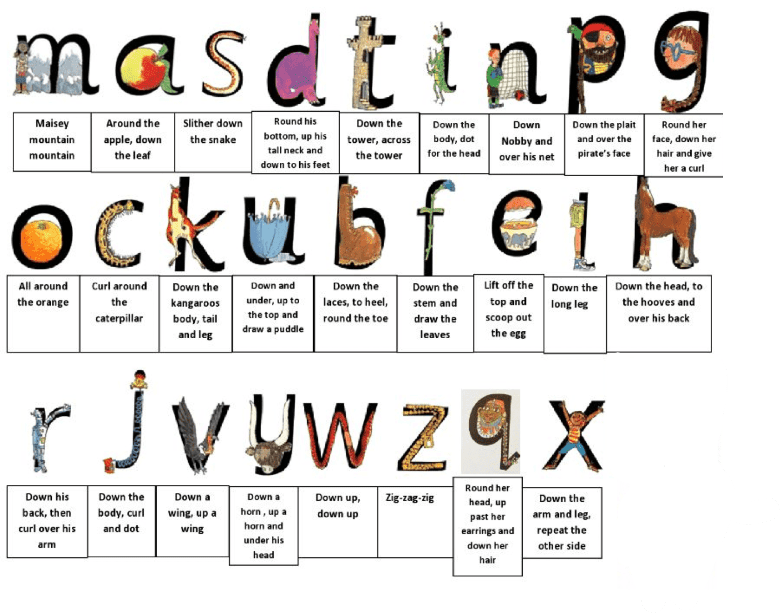
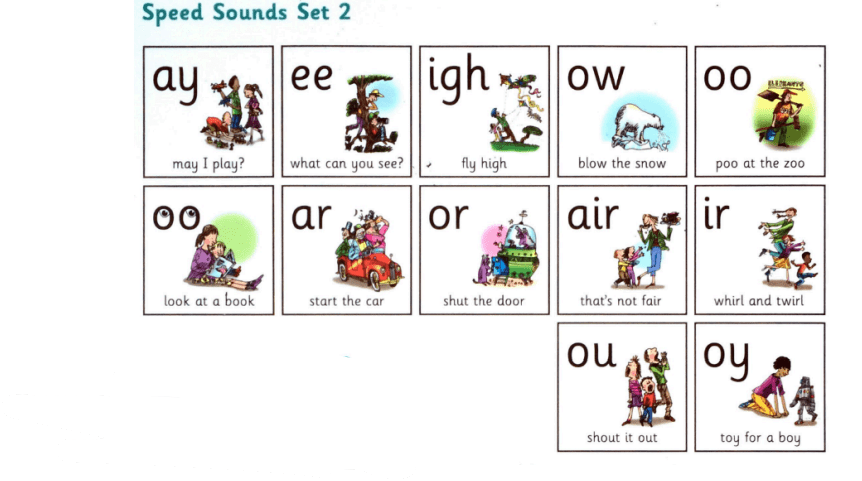
Read, Write, Inc (RWI) is a phonic based approach to teaching reading. It involves pupils learning to read sounds and how to blend them together to read words.

RWI is a successful reading programme that enables every child to become a confident and fluent reader. It aims to teach all pupils to read at a pace that they are comfortable with.

The pupils learn 44 sounds (called speed sounds). These are the letter sounds and not letter names.

The speed sounds are divided into small groups. Once they have learnt all of the sounds in one group, they can move on to sound blending the letters in that group to read words.

(Ruth Miskin Training)​

This year, we have made the decision to move from using PowerMaths to following the White Rose Maths scheme across the school.

Why the change?
While PowerMaths provided a strong structure, we believe White Rose offers even greater flexibility, depth and support for both teachers and pupils. It closely aligns with the National Curriculum and builds a strong foundation of number sense, reasoning, and problem-solving – key skills that children need to succeed in maths as they move on to secondary school.

How White Rose works

  • Maths is taught in small, carefully sequenced steps, ensuring children fully understand one concept before moving on.

  • Children are encouraged to use a variety of methods, including practical resources, drawings and formal written strategies.

  • Problem-solving and reasoning are built into every lesson so children can explain their thinking and apply their knowledge in different contexts.

The children are also taught key mental arithmetic skills and multiplications through songs, rhymes and chants with actions.

Our writing lessons follow the Pie Corbett ‘Talk 4 Writing’ style of ‘Imitate – Innovate – Invent’; put simply ‘I do – We do – You do’. More information about this method of teaching can be found in the ‘Curriculum’ section of the website, under ‘English’. Our class will typically practise two genres each half term.

As part of our morning routine, children have a healthy snack (either fruit or vegetable), which is provided by the school.

Alternatively, the children can bring in their own healthy snacks from home. Again these must be either fruit or vegetable. Nuts or items containing nuts are not allowed.

Please click on the School Meals button on the right-hand side of the page to see our lunch menu.